As Swiss watchmaking excellence eyes India, it is worth celebrating the pioneering achievements of master watchmaker Henri Grandjean: the chronometer maker from Le Locle led the way, becoming the undisputed reference figure in the 19th century.
A Shaniah Asha Gibson’s Selection / @TRP, Cabinet d’écritures et d’influence
Insta | Linkedin | Facebook | Insta JSH | Insta SWP | Subsribe to JSH
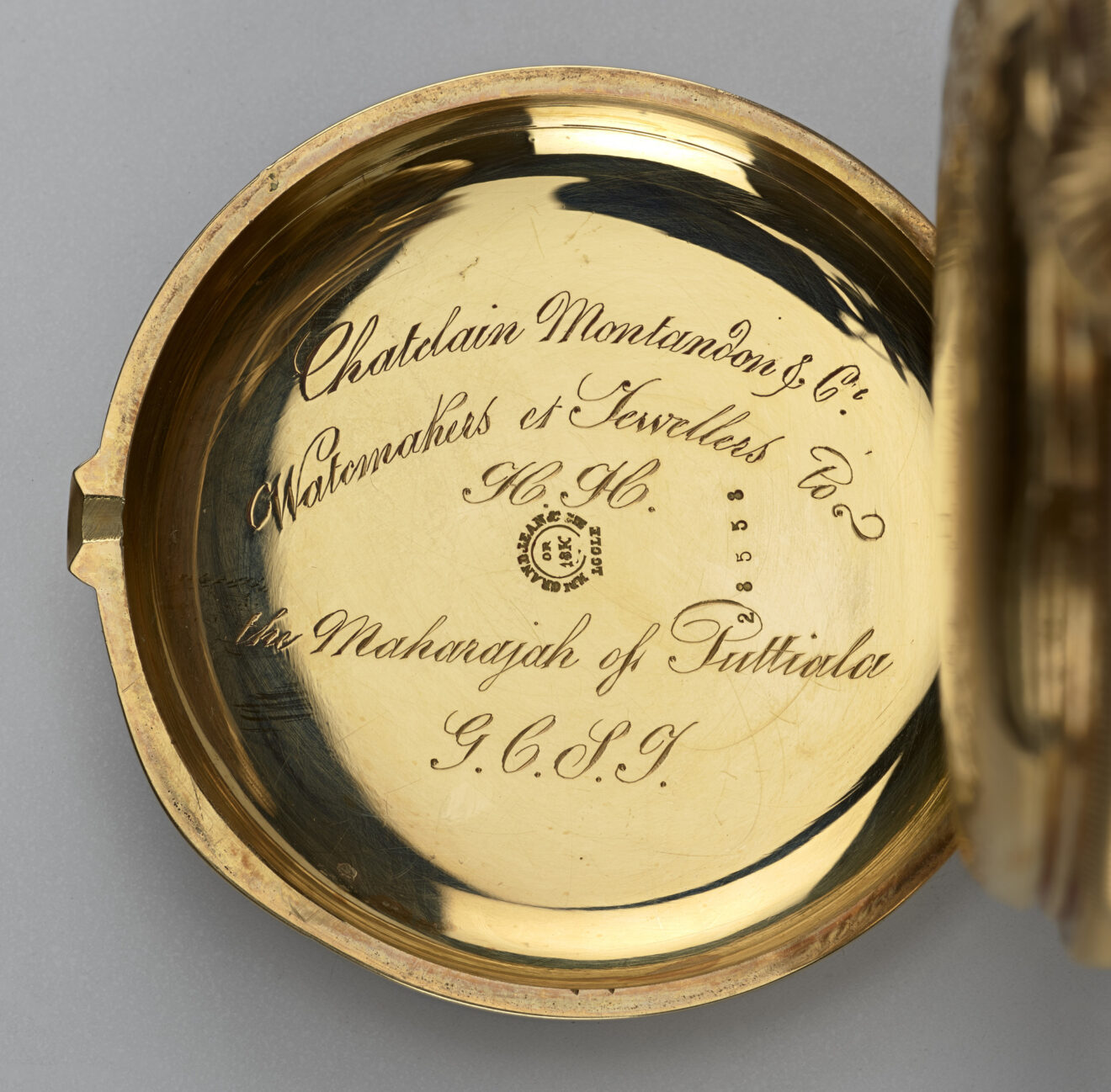
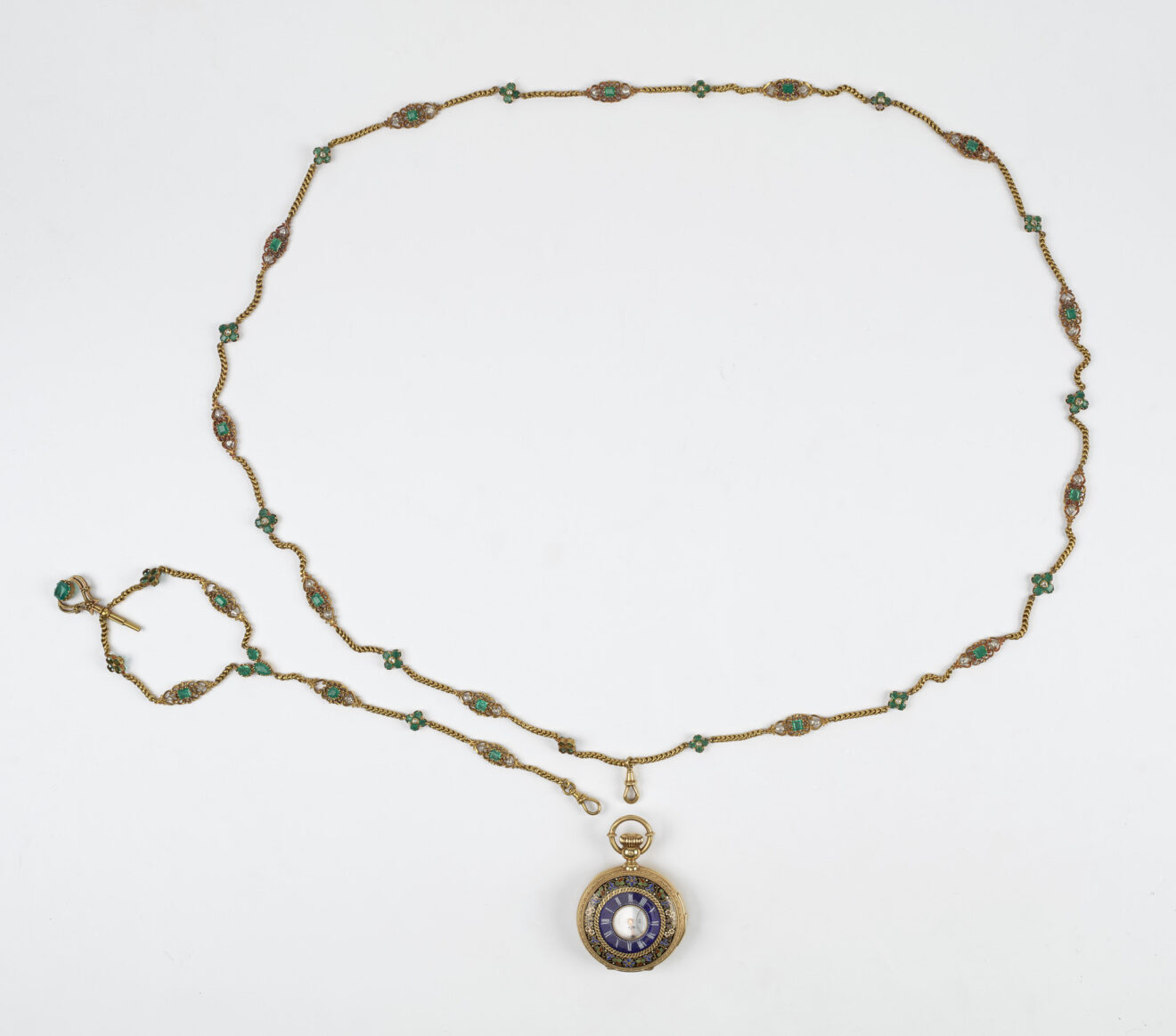
Exclusively produced for the Indian market, a few rare Henri (or Henry) Grandjean timepieces are treasured in prestigious private collections, such as that of the British Crown (The Royal Collection Trust), or displayed in world-renowned institutions such as the Patek Philippe Museum in Geneva and the Watchmaking Museum in Le Locle.
As early as 1860 in India
After establishing itself in Latin America in 1820, the Henri Grandjean company pursued its pioneering vision of international trade toward emerging markets outside Europe.
«Indian society was home to an elite class with an affinity for luxury watchmaking. Several Henri Grandjean watches belonged to Indian monarchs and dignitaries, who were true connoisseurs»
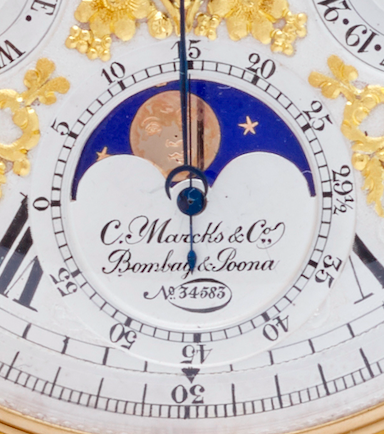
Henry Grandjean, from London to Bombay
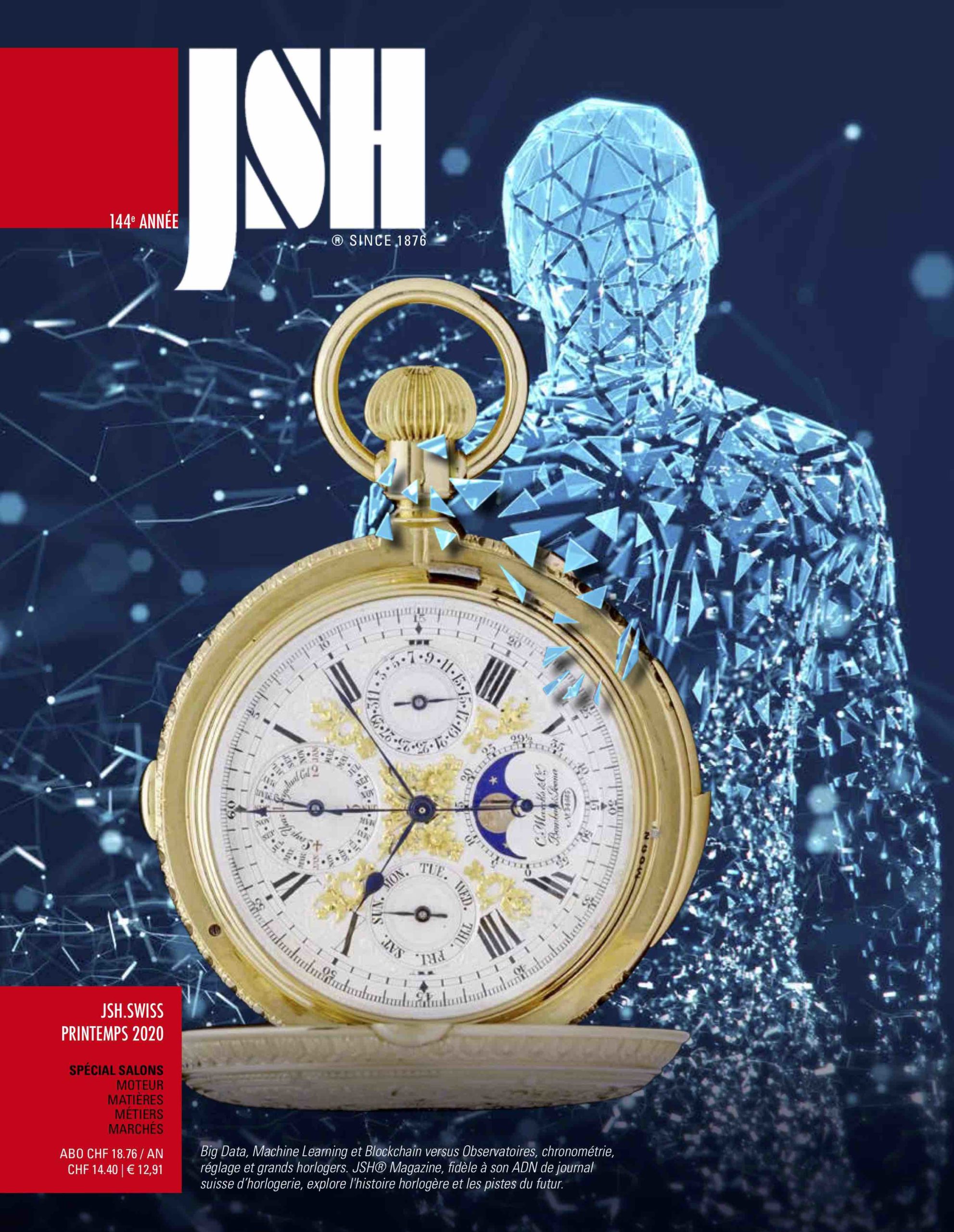
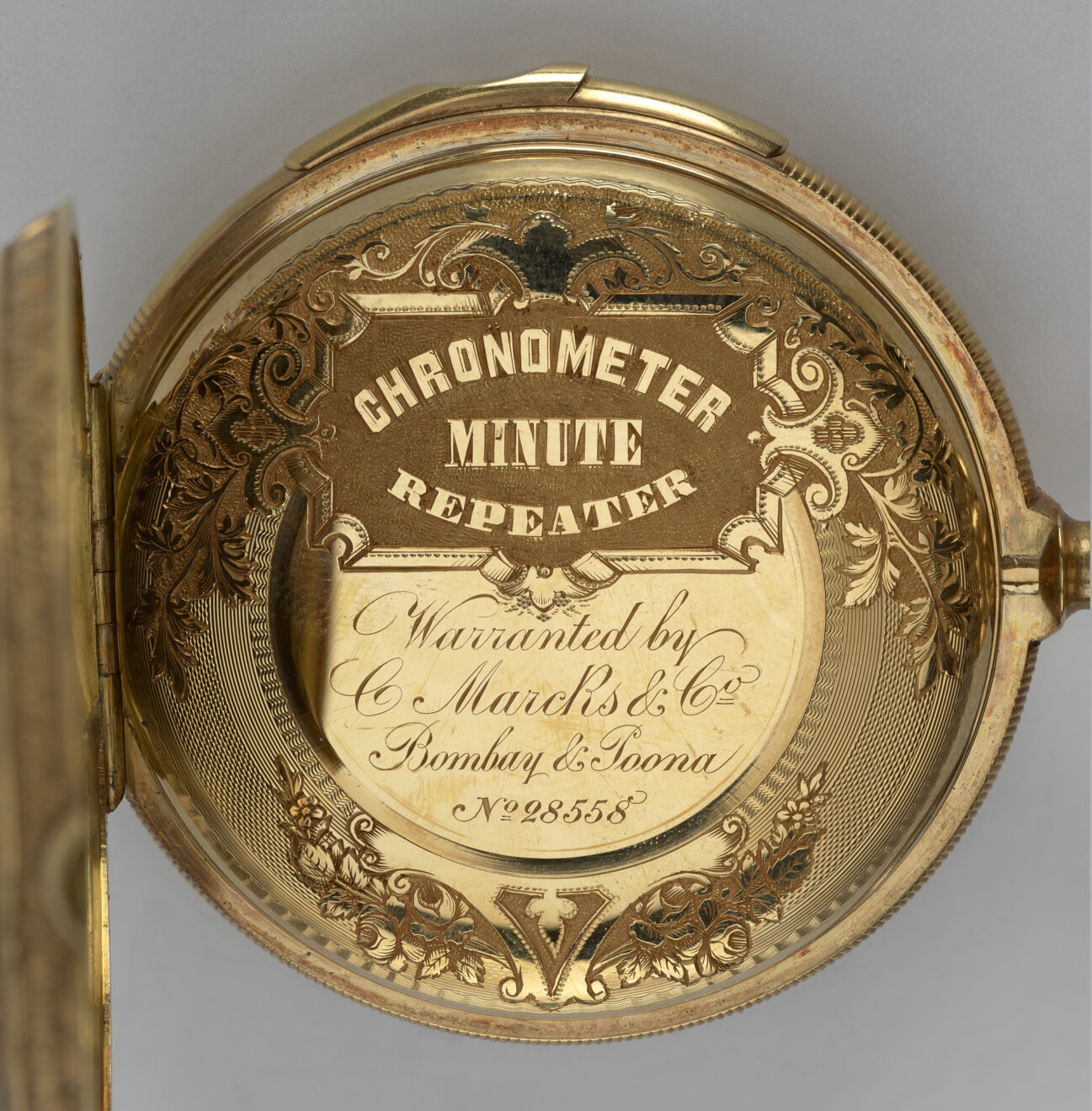
The watchmaker entered this promising new market via the United Kingdom, with London as its strategic hub. In the British capital, Henri Grandjean, who had changed his first name to “Henry,” relied on a network of agents, including William Meyerstein. He collaborated with renowned retailers such as Marcks & Co., which specialised in richly decorated pocket watches that were highly prized by Indian customers.
«In order to meet the expectations of this demanding clientele, Henri Grandjean produced watches combining horological complications and refined craftsmanship. Some pieces were branded with the Locle signature, others with Marcks & Co; even without any inscription, their flawless quality was a testament to the incomparable expertise of the Henri Grandjean & Cie watchmaking workshops» explains a 19th-century watchmaking expert.
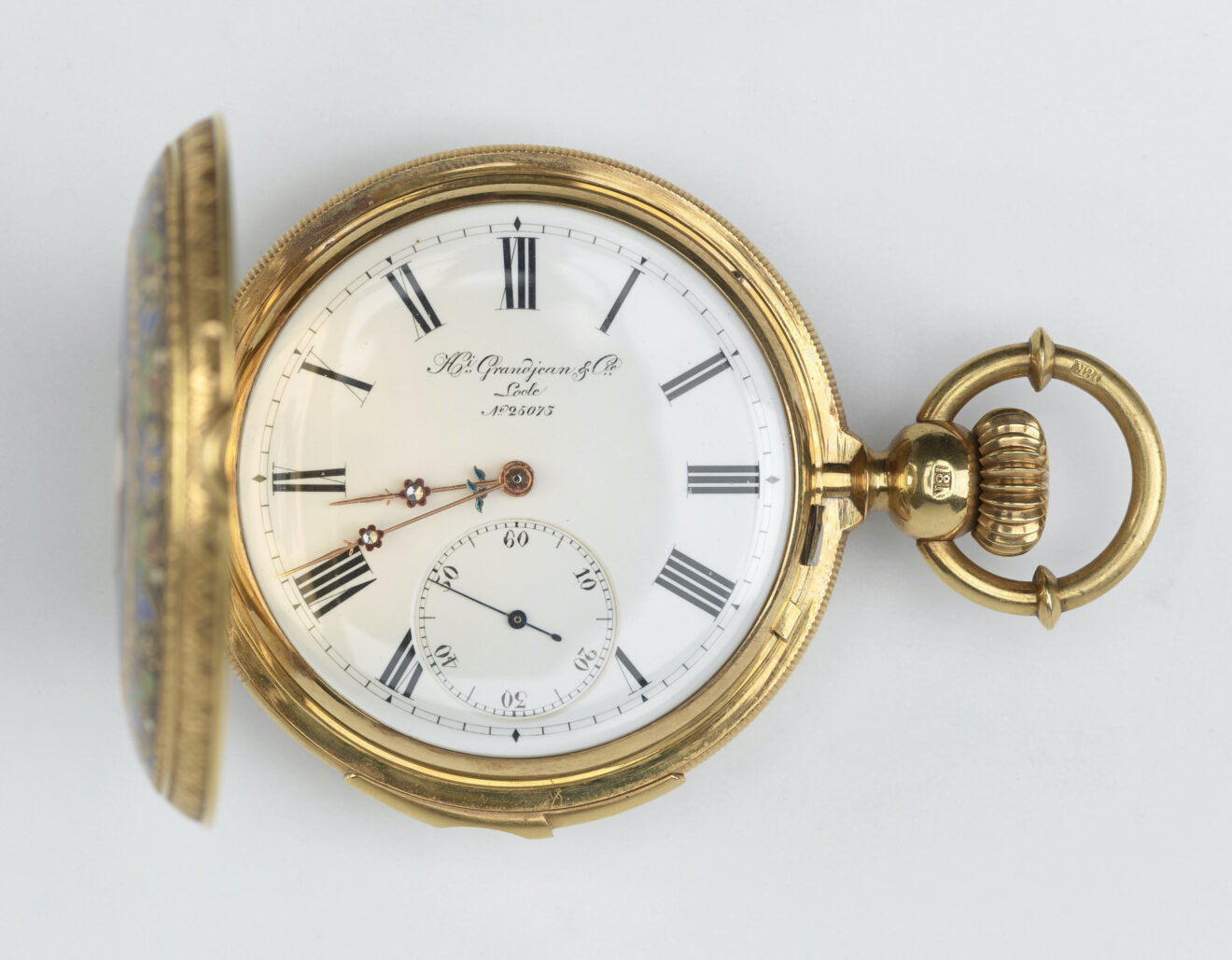
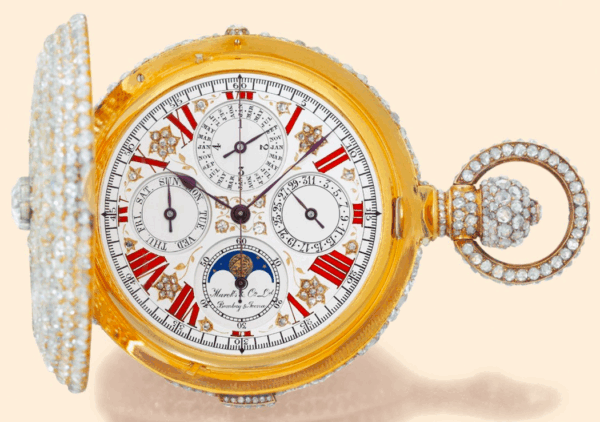
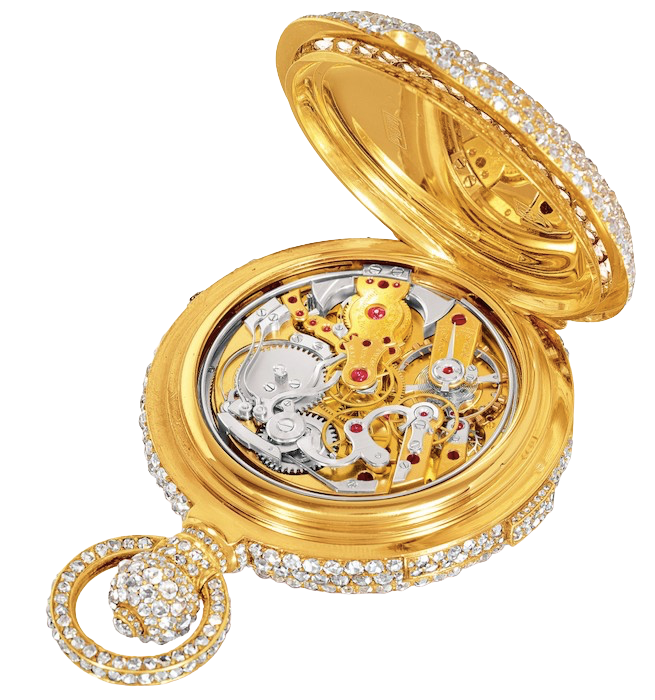
Spectacular pocket watchm sold by Antiquorum in 2005
One of the most extraordinary timepieces ever produced for the Indian market by Henri Grandjean was acquired by Mahbub Ali Khan, member of the Nizam dynasty of Hyderabad.
This sovereign was famous for his lavish lifestyle, his love of luxury, his fine cars, and his sophisticated clothing… And above all for his remarkable collection of precious stones, which today explains why the pocket watch sold by Antiquorum in Geneva in 2005 had belonged to him: 1,150 diamonds of various sizes cover both sides of the case, the crown, and even the dial. As for the chain, it is also entirely set with stones.
Ultimate minute repeater offered to the King of Britain
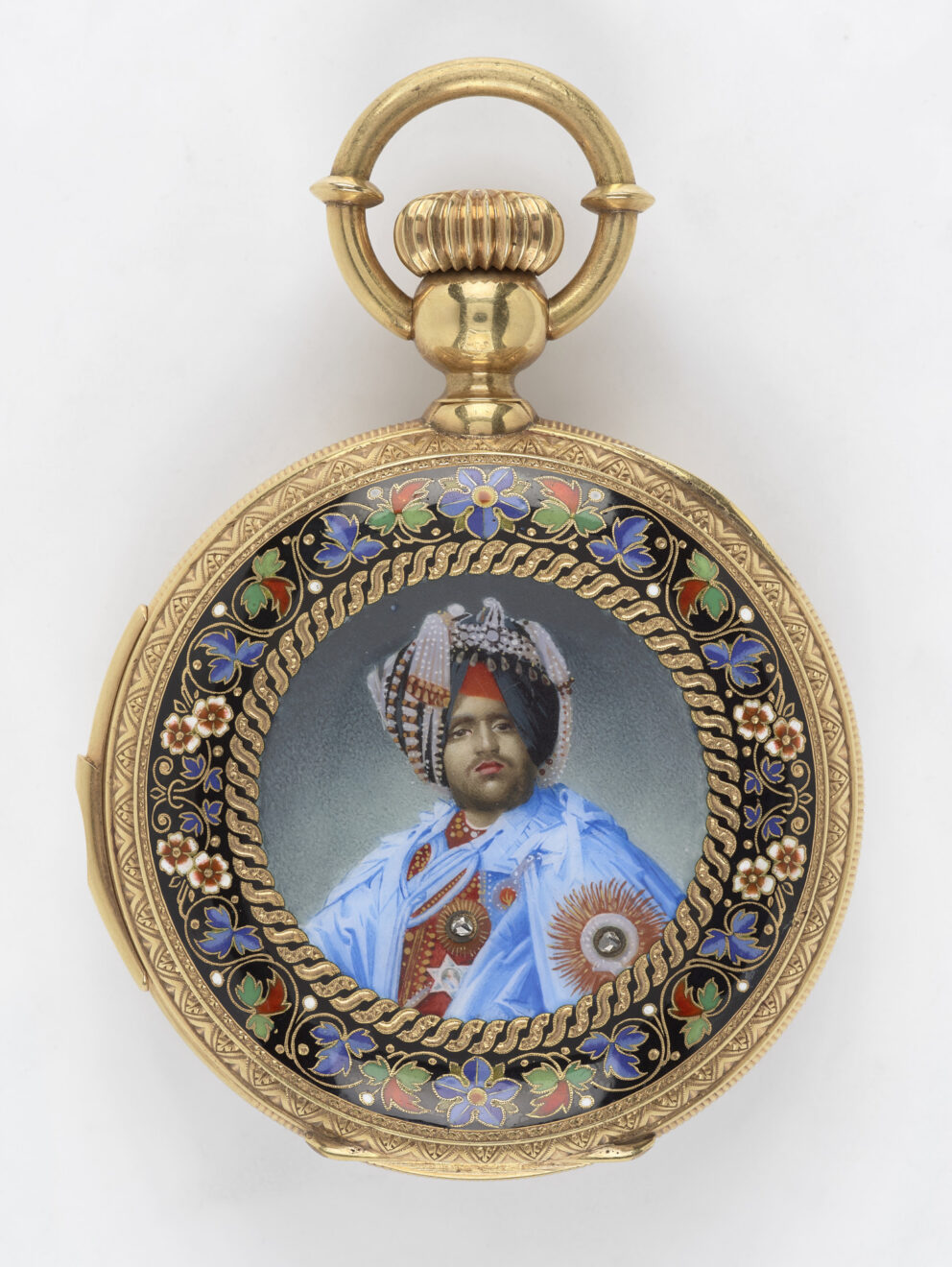
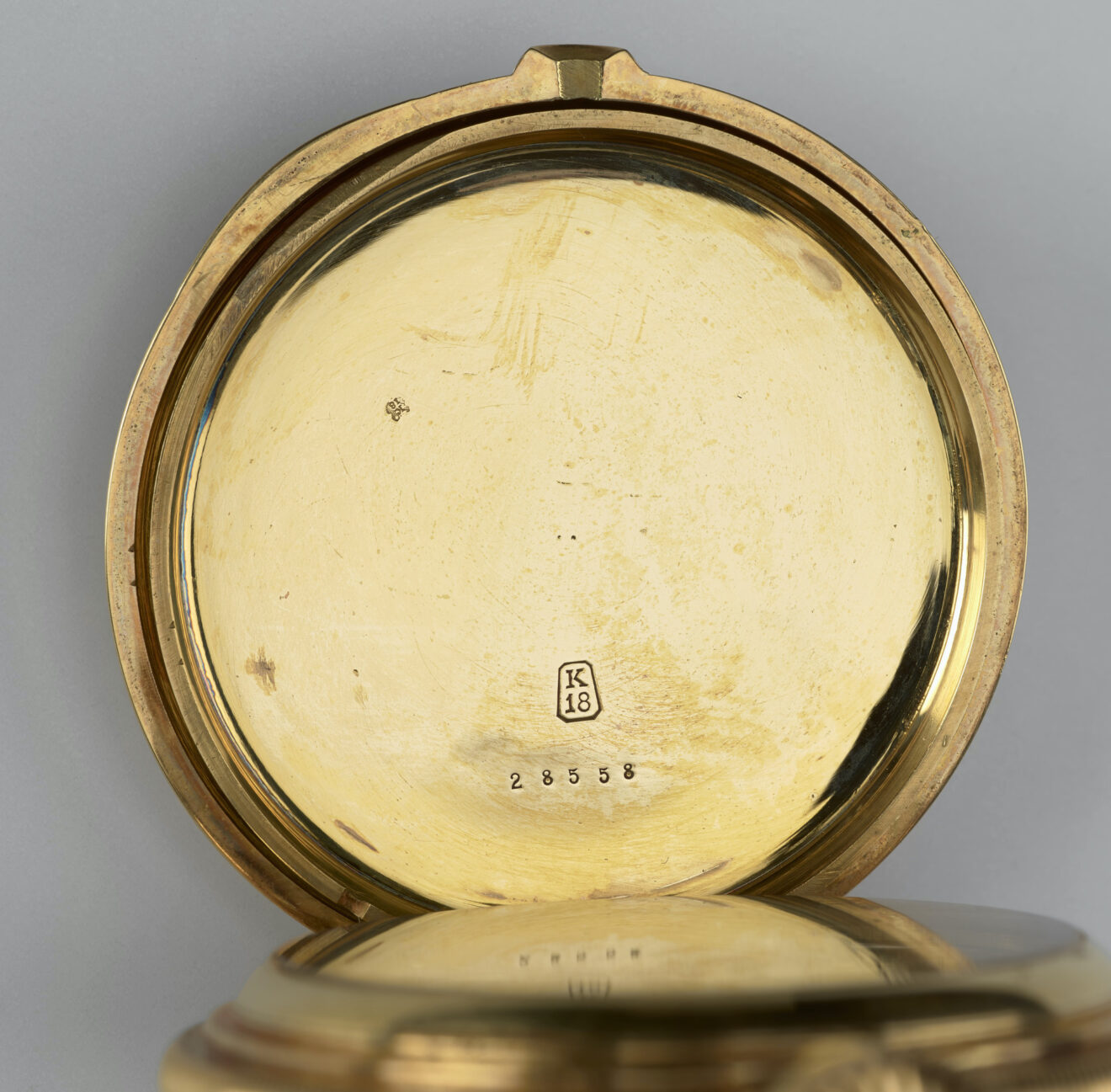
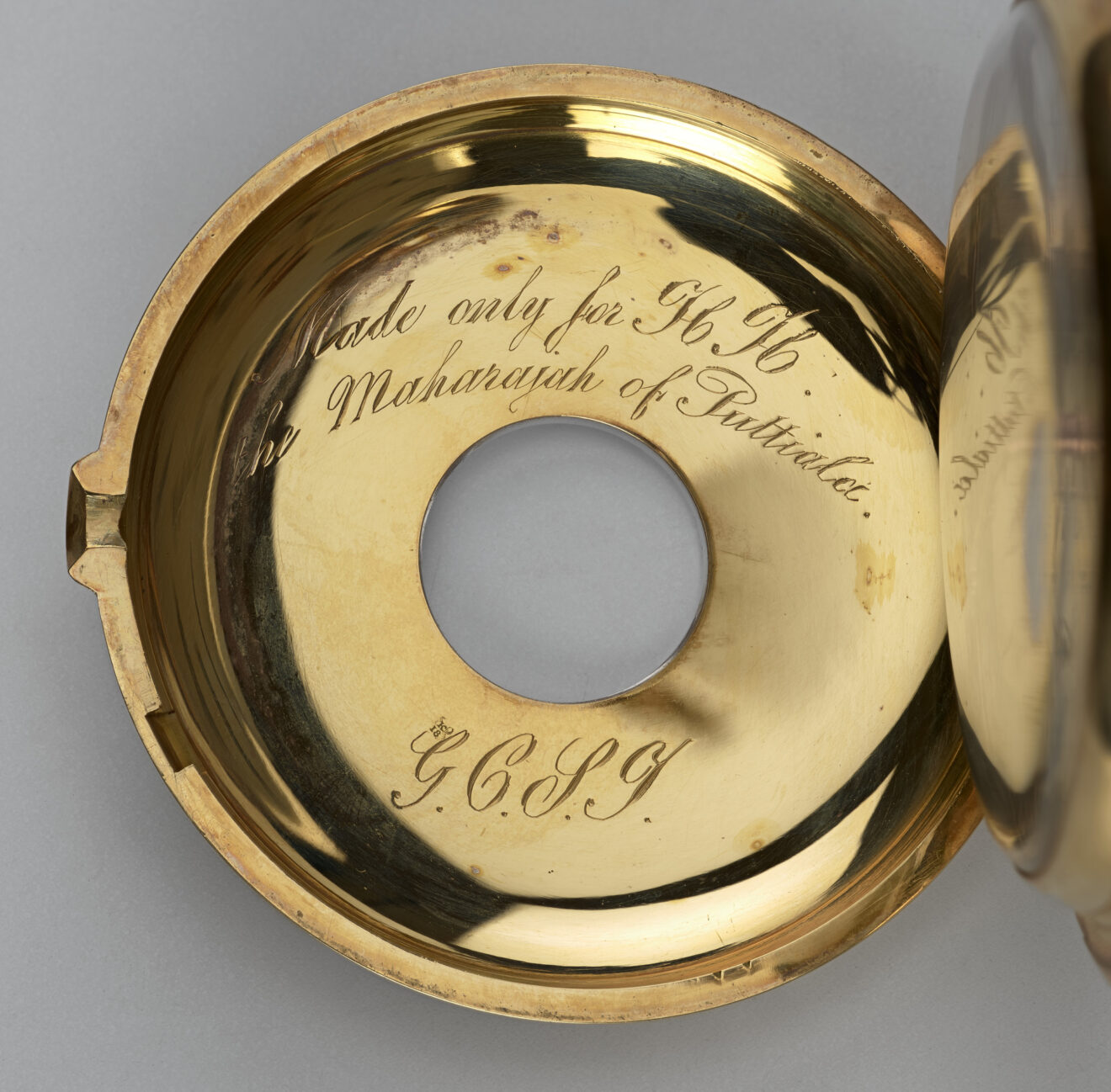
It is undeniable that the Maharaja of Patiala chose to present Edward VII (1841-1910), King of the United Kingdom and Dominions and Emperor of India, with a minute repeater chronometer made by Henri Grandjean because the master watchmaker from Le Locle was the absolute epitome of horological excellence at the time.
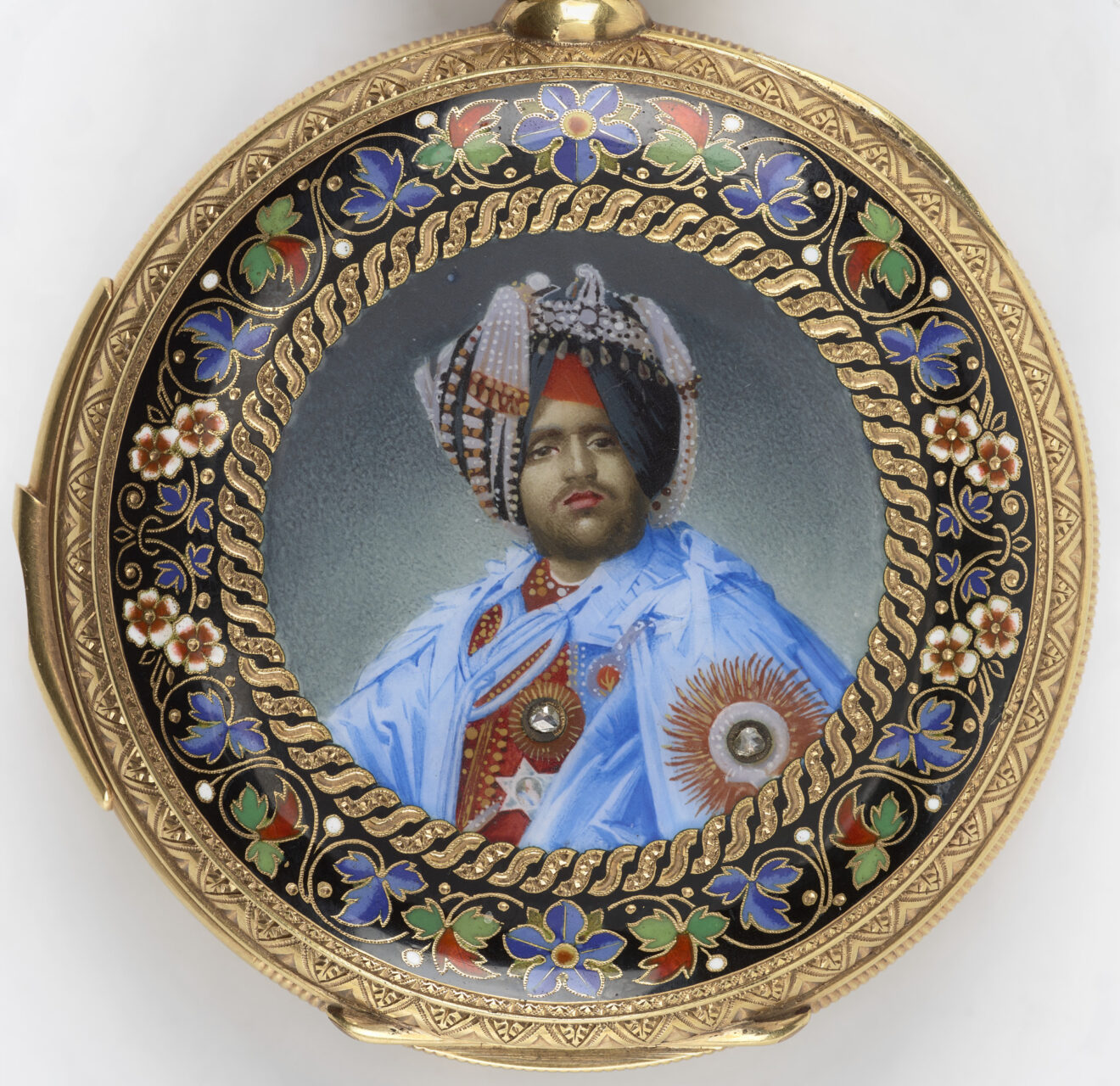
This remarkable gold half-savonnette pocket watch was presented to the English king during his 1875-1876 tour. Decorated with enamel and set with diamonds, its back reveals an enamel portrait of the Maharajah, adorned with the Grand Cross of the Order of the Star of India, an honour he received in 1870..
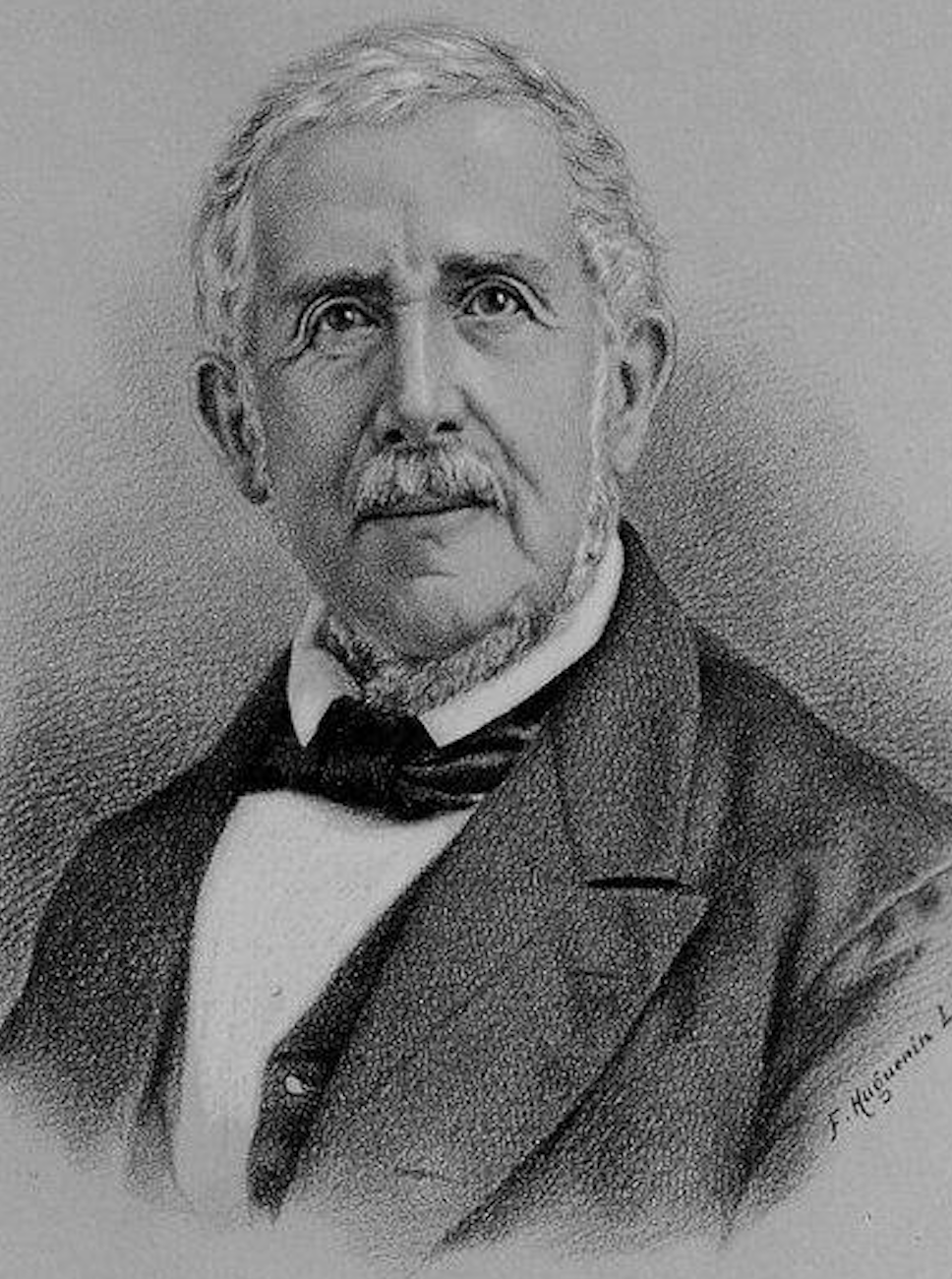
Henri Grandjean, watchmaker and builder: from the Neuchâtel Observatory to Unesco
The history of Swiss watchmaking excellence owes a lot to chronometer maker Henri Grandjean, who, along with other watchmakers, led the construction of the Neuchâtel Observatory, a watchmaking institution that the most prestigious brands still claim to belong to and which, from 1931 until 2022, broadcast the radio time signal throughout Switzerland
The Le Locle town, known as the “City of Precision,” owes a debt of gratitude to him for providing it with the ultimate source of precision via the cable he had laid between the Observatory and the Watchmaking School, an establishment he also founded. Rue “Henry Grandjean” still stands as a memorial to his achievements.
Finally, Henri Grandjean left other architectural traces, such as the construction of the Quartier de l’An-Neuf (now the Quartier du Progrès), which in 2009 enabled Le Locle to join La Chaux-de-Fonds’ application to have watchmaking urbanism listed as a UNESCO World Heritage Site.