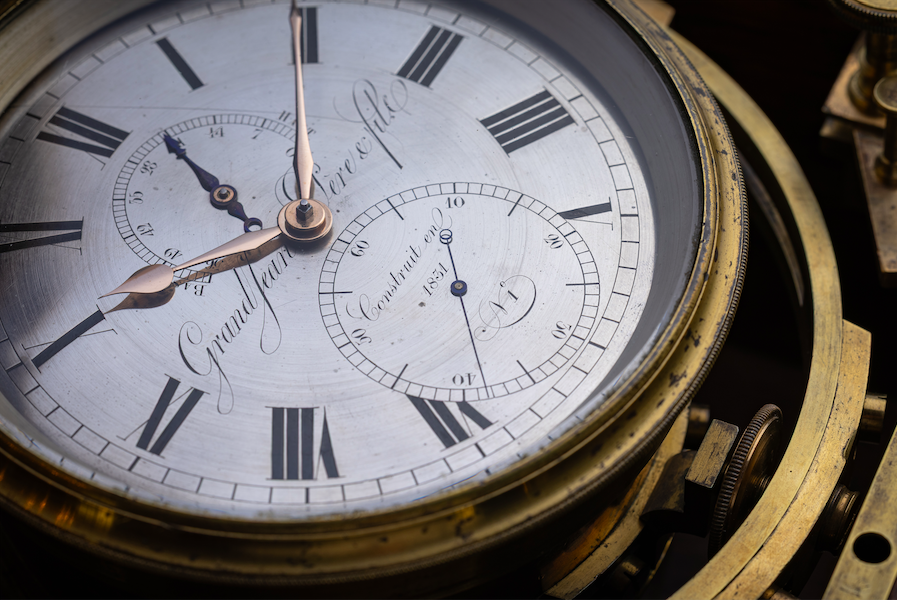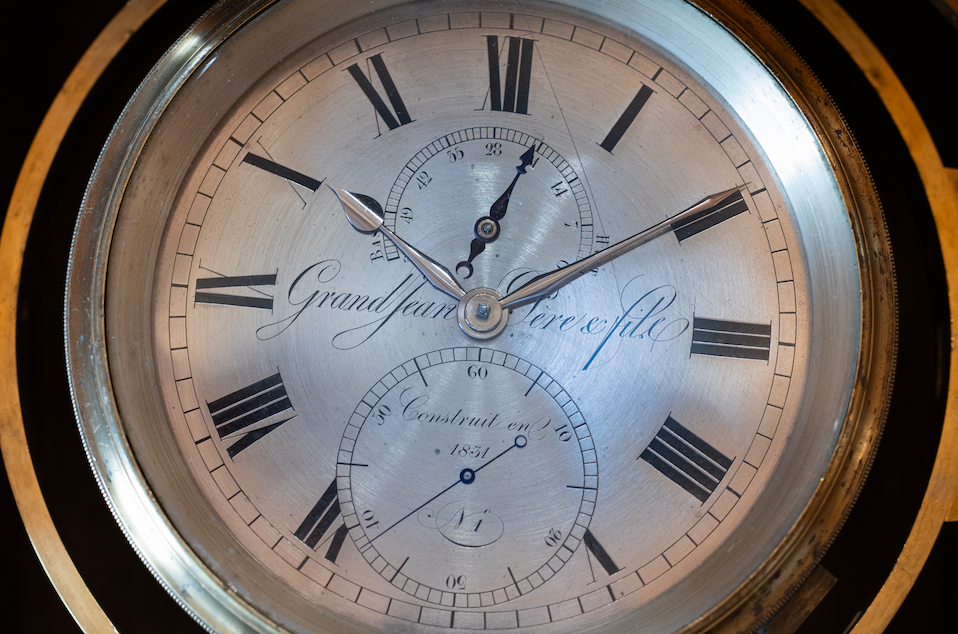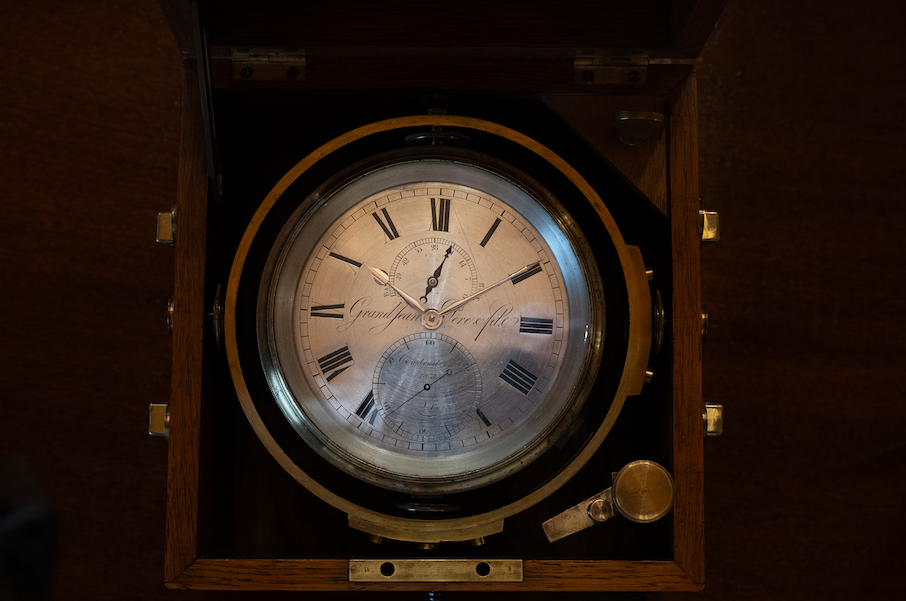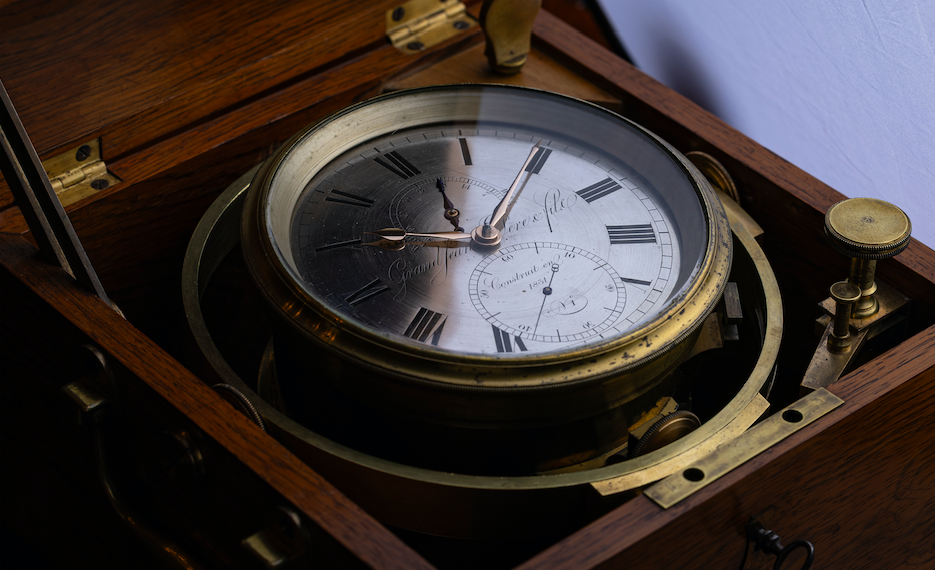
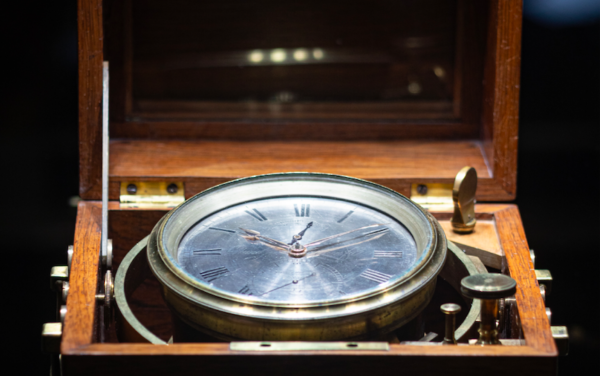
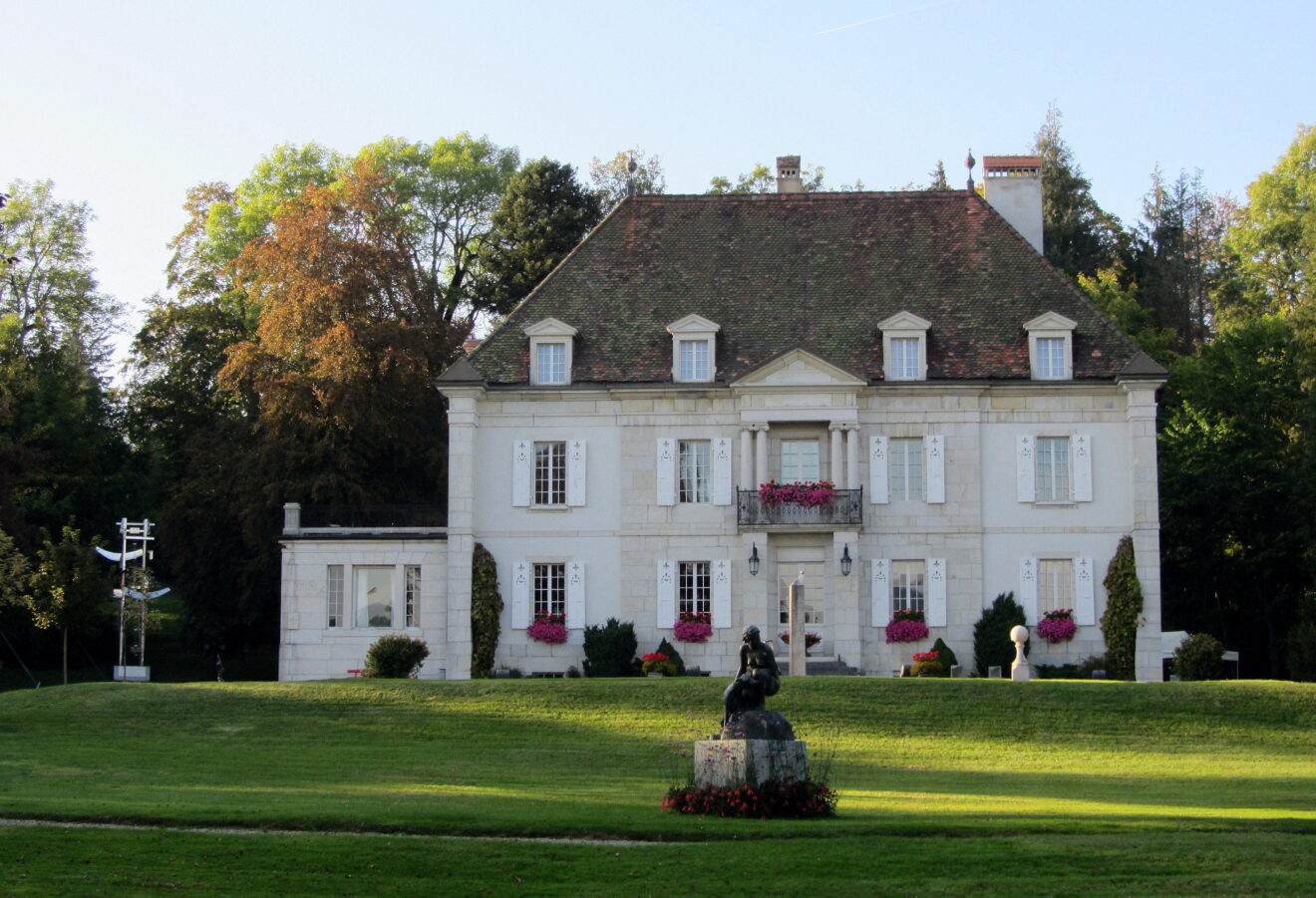
The pursuit of ultimate precision finds one of its finest expressions at the Le Locle museum, in the marine chronometer built by Grandjean Père & Fils in 1831: a remarkable timepiece that travelled out of the Château des Monts for the very first time, to Geneva for the occasion of a single launch.
By Vincent Daveau, watchmaker, journalist and historian
Insta SWP | Insta JSH® | Facebook | Twitter | Linkedin | Subscribe to JSH®
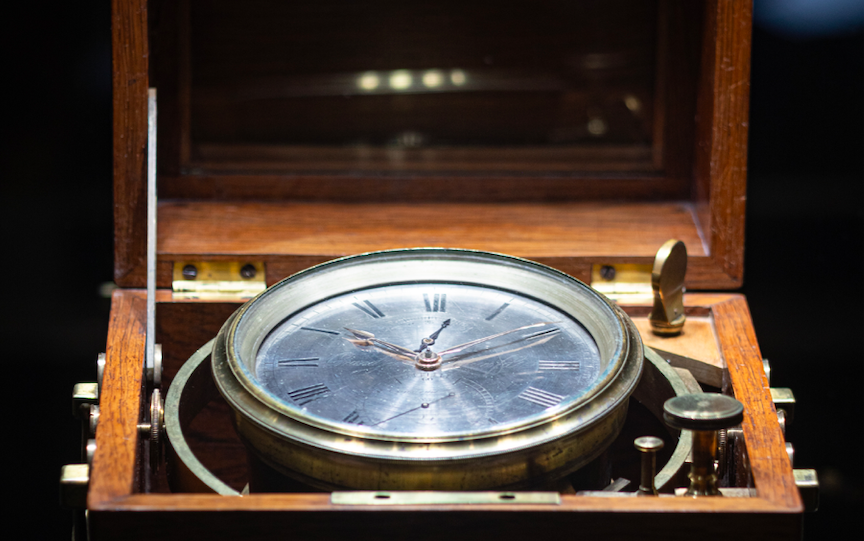
In today’s GPS era, it is easy to forget that in the early 19th century the marine chronometer stood at the very summit of mechanical precision. Aboard ship, it was the supreme instrument of safety.
A favourable moment for watchmaking
Costly and still rare, the chronometer allowed sailors on Atlantic crossings lasting three to six weeks to fix their position quickly, guarding against the shipwrecks so often caused by dead-reckoning navigation. A drift of just a few seconds could translate into a positioning error of several kilometres, enough to run even the ablest captain aground on a shoal or a hostile coast.
It was against this backdrop that Henri Grandjean developed his own chronometers: inspired by English models, yet thoroughly reworked. His first piece, made after his return from Brazil in the 1830s, already reflects the methodical drive for improvement that would come to define his career. Preserved as a reference piece at the Château des Monts, the Le Locle watchmaking museum, it shows a maker who does not merely copy British technical solutions but weighs their strengths and weaknesses, adapting his construction to his own vision of chronometric precision.
The 1831 marine chronometer by Grandjean Père & Fils
The 1831 model signed Grandjean Père et Fils, held at the Le Locle museum, reveals that the bulk of the master’s work is concentrated in the escapement. Like every chronometer since the turn of the 19th century, it features a detent escapement, a free, direct-impulse, single-beat design that stands out as the finest ever devised for a portable timepiece.
Grandjean’s obsession with precision, which he regarded as inseparable from the balance between the components of the regulating assembly, explains several of his technical choices: uncut-rim balance wheels fitted with internal bimetallic blades acting on compensating weights. This sophisticated arrangement corrects the effects of temperature on the balance-and-hairspring assembly without altering the wheel’s overall geometry. The result is improved isochronism, and, with it, exceptionally high accuracy.
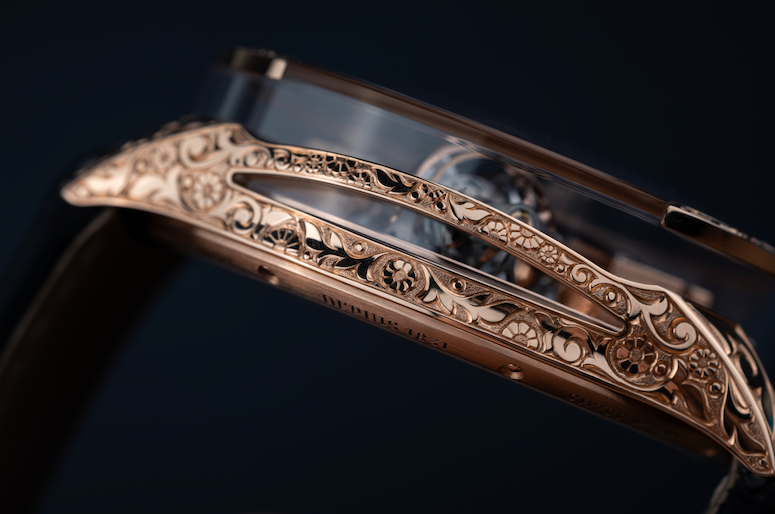
A feature found in no other watchmaker’s work
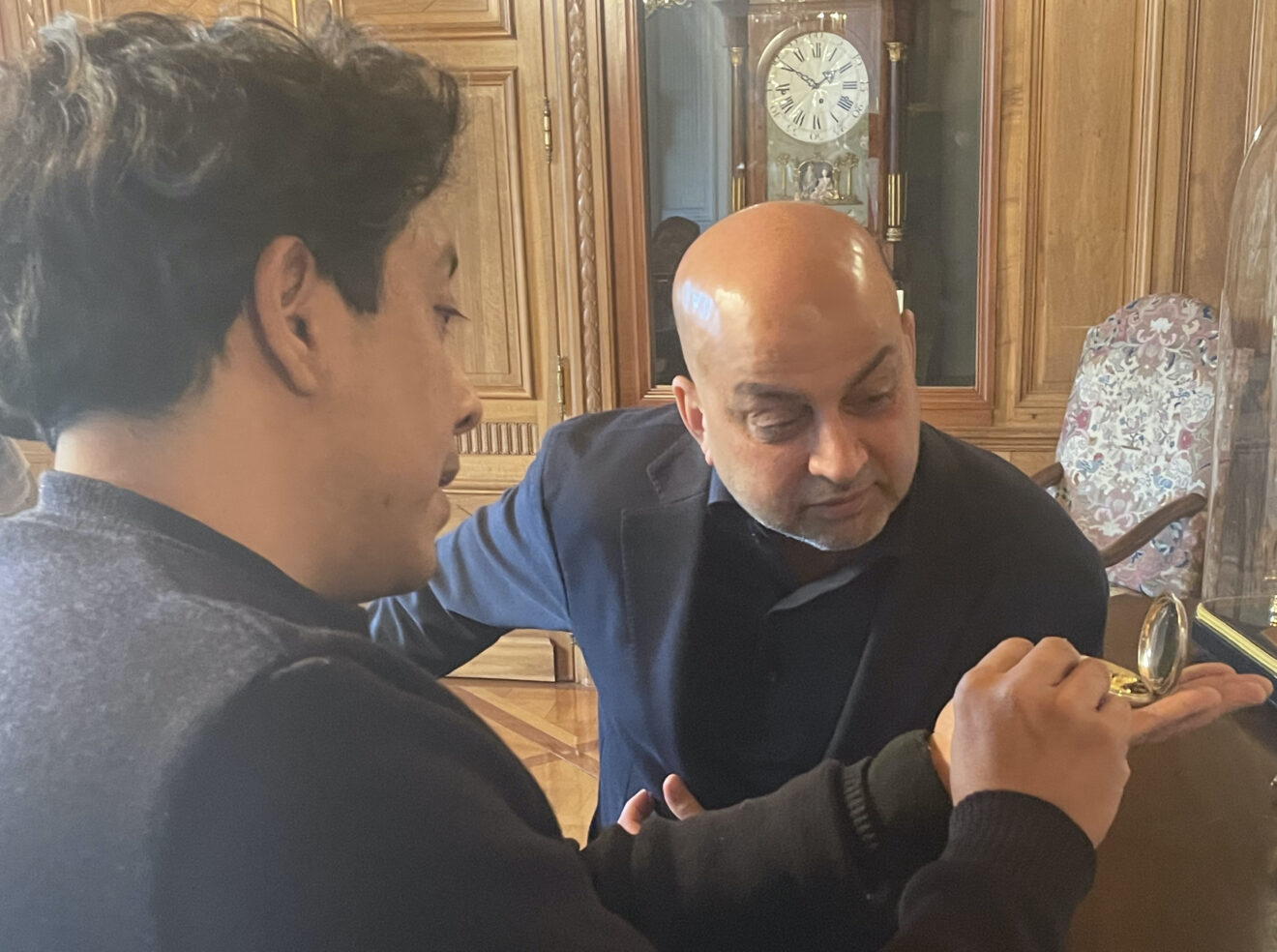
The piece held at Le Locle, shown beyond the museum walls for the first time at the evening celebrating the modern-day continuity of Henri Grandjean & Cie, reveals a genuinely experimental approach on the part of its maker. What holds the experts’ attention is neither the dismantled balance, striking as its sophistication is, nor the escape wheel with its long teeth. It is the small impulse pallet set beside them: cut from a single piece of what appears to be a precious stone, most likely brought back from Brazil by this travelling, visionary watchmaker (photo).
This component, noticed by very few, is what makes Grandjean’s chronometer unique. Ordinarily made of brass with an impulse point formed by a set-and-cemented ruby, here it becomes proof of the man’s talent: by setting a part cut from a single hard material, he was able to markedly improve the dynamic balance of his oscillator.
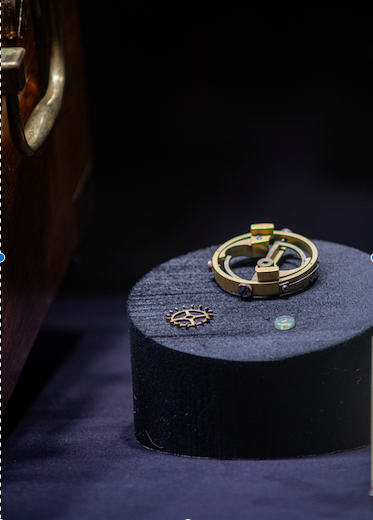
Through this single detail, Grandjean’s absolute quest for precision comes fully into focus, confirming him as a leading figure of the Neuchâtel chronometric tradition — his influence reaching well beyond his own creations.
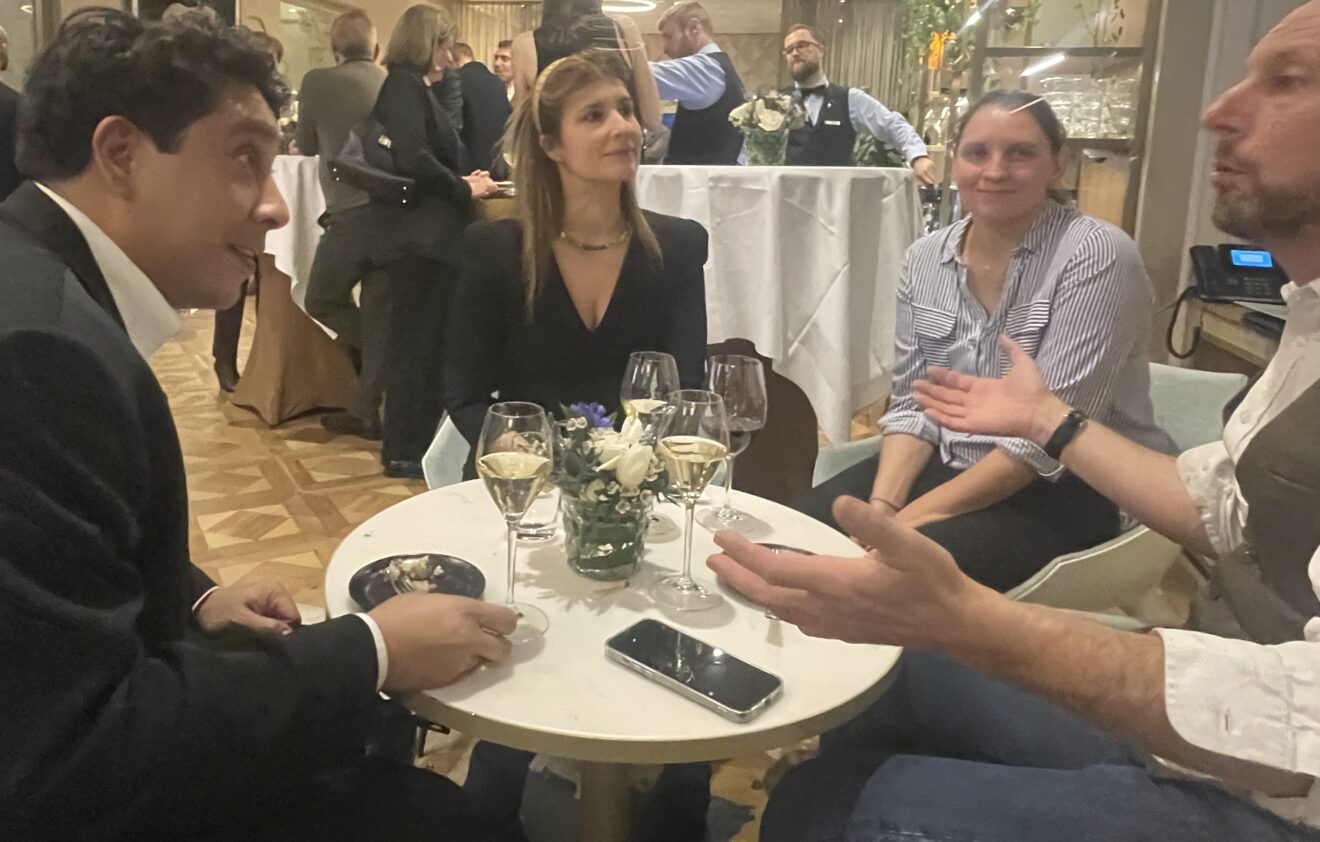
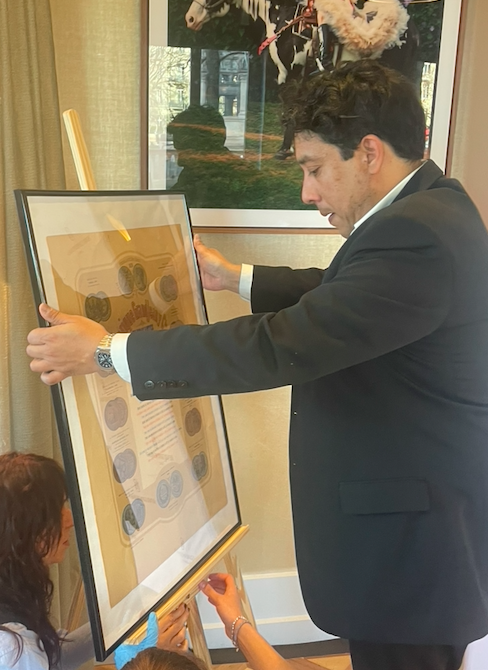
Geneva, 29 January 2026, at the Ritz-Carlton:
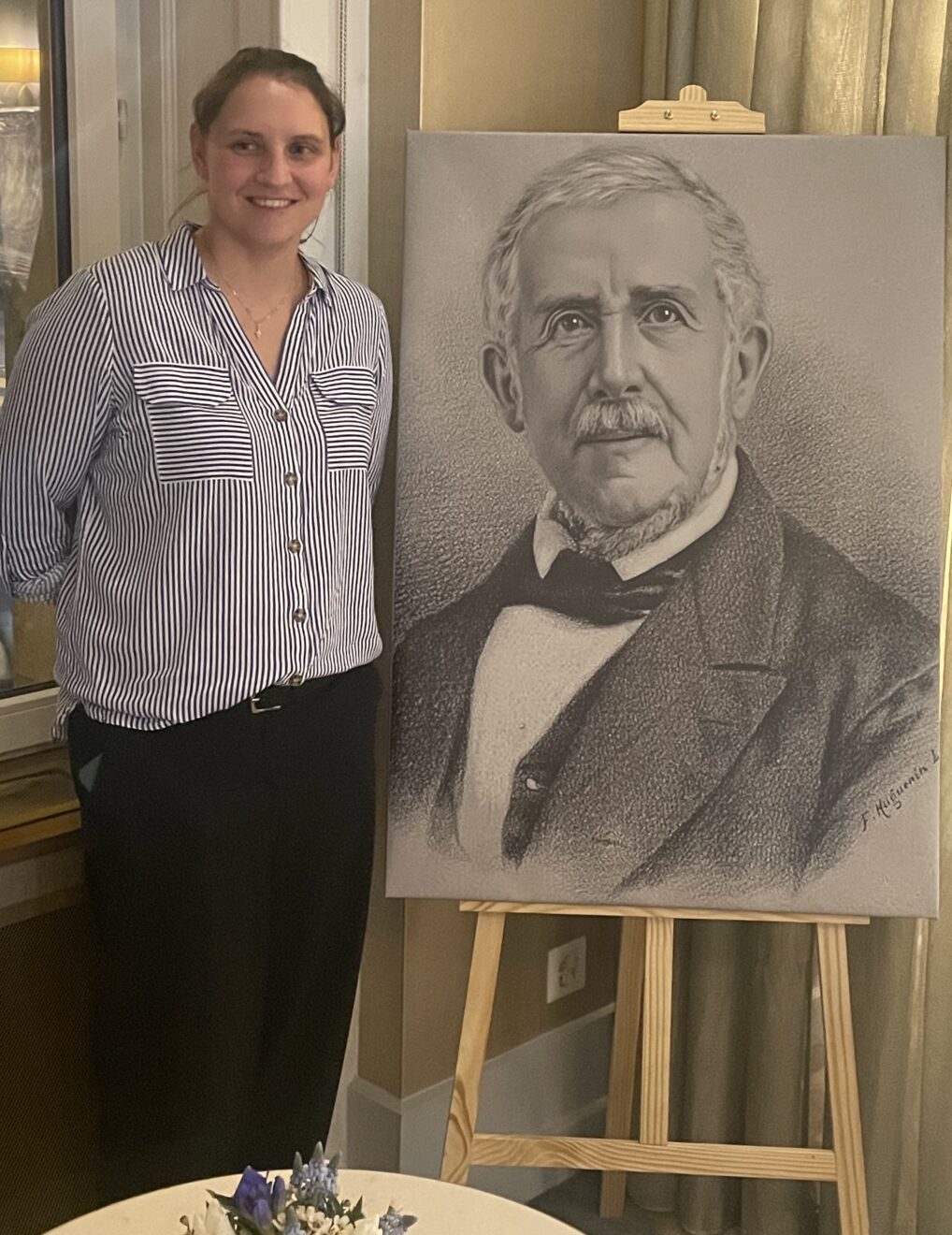
watchmaker-restorer Micaela Fahrni, of the Le Locle museum.
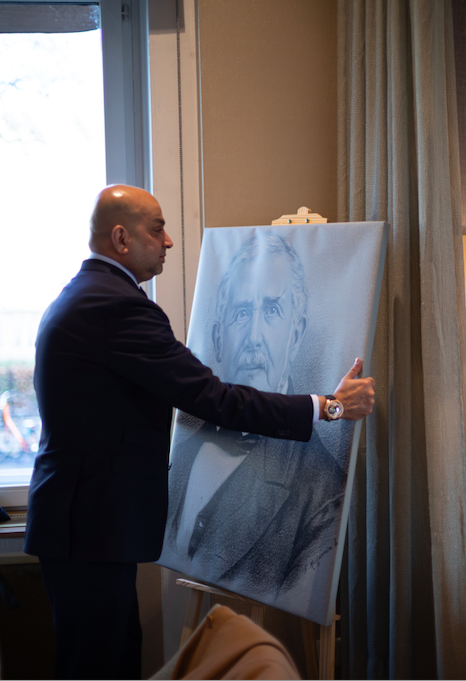
In the history of high-precision timekeeping, Henri Grandjean (portrait) remains overshadowed by the great English dynasties, Arnold, Dent, Frodsham, and their Parisian counterparts, Berthoud and Breguet, even though he helped turn precision watchmaking into a genuine applied science.
One of those scholar-craftsmen whose work reaches far beyond the object itself, he was born in Le Locle in 1803, among the makers who grasped early on just how much the marine chronometer mattered in a world where navigation had become the cornerstone of international trade.