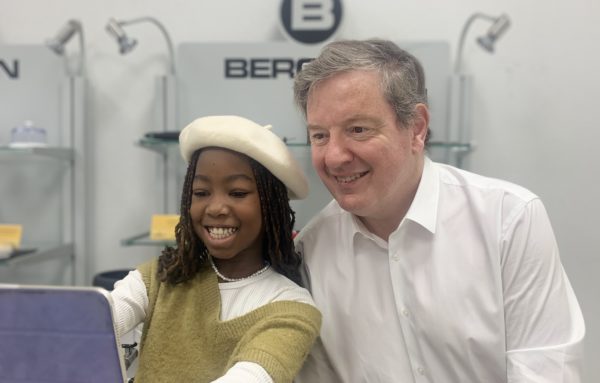
My name is Amandine, I am 11 years old. I am keen on watchmaking and, since the age of 7, when asked what job I want to do, I answer “watchmaker-designer at Bulgari”… In the meantime, I am interviewing people in the sector.
By Amandine, the youngest Swiss Watch Passport columnist
Portrait Amandine | Insta SWP | Insta JSH® | Insta Amandine | Facebook | Twitter | Linkedin
Who are you at the office?
I’m the director of the Company Bergeon. And my name is Vladimir Zennaro, a first name of Italian origin I might add.
And who are you at home?
I’m the same Vladimir Zennaro. I don’t really change who I am. I’m a happy father and grandfather.
How did you get involved in the watchmaking industry?
By pure chance! I came to Bergeon a few decades ago with no idea of what the watchmaking world was like. I was looking for a challenge in a position linked to procurement, purchasing and sales. There was an opportunity and I joined the company where I’ve been for 36 years now.
What do you remember about your first watch?
That’s a very good question, and you see, without knowing that you were going to ask me today, I thought about it not so long ago. I had an uncle who was working for a big Swiss watch company. And he used to give watches to his children. When I was six or seven, I told him that I was a little disappointed that he’d never given me one and he came for Christmas with a magnificent watch for me. I’m not sure what brand it was, but surprisingly, it must have been a LIP model. For those who know, LIP is a very old company and I don’t know what happened to it, unfortunately. I was very proud of this watch and wore it for years at school, and everyone wondered where I got it. Then I got others and I don’t know where that very first one gone.
What do watches mean to you?
They represent exceptional, complicated, interesting and volatile know-how. And at the same time, it’s a source of ambition for many people. Owning a watch wasn’t necessarily a foregone conclusion, but today we can see that interest in watches, across all generations, has not decreased at all. They represent something quite special in terms of an object you can covet, the object you can afford in your lifetime.
You are CEO of Bergeon, which manufactures tools for watches. Can you tell me a little about this company?
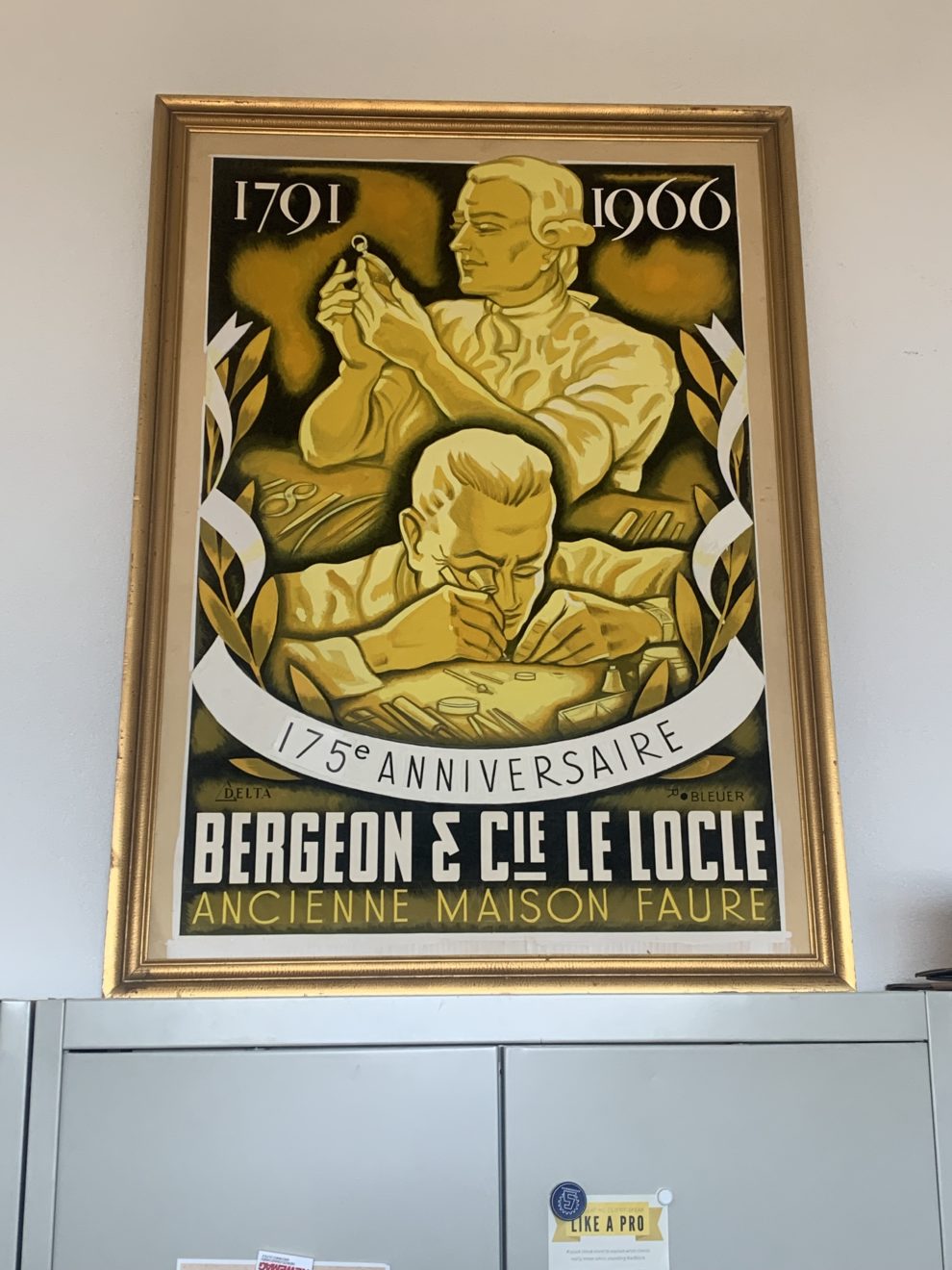
A few words won’t be enough. Joking aside, we’re an SME with around sixty employees. It went through the transition from a very family-run business at the origin, over two centuries ago, to a more regional and then international company (a hundred years ago, we were already selling all over the world). This organization grew with the international distribution until its reconversion, some ten years ago, from a primarily commercial company to one that produces and carries out its own projects. It’s a game change that brought a company with a craft vocation to an industrial enterprise.
Why should I buy a Bergeon tool rather than another? An Asian one, for example?
It may seem anecdotal, but basically, in absolute terms, any Asian tool will look like a Bergeon tool. So a priori, if I don’t have an absolute reason, I can buy an Asian product. However, what we’ve been seeing for a very long time now is that, over time, the Asian tool will break down a little more quickly, or even much more quickly. And the tools we manufacture at home, because we also have a tradition of using tools, enable us to have objects that are very durable, with no programmed obsolescence, unlike electronic devices, for example. The company’s proximity to the watchmaking world also means that the products we develop and produce are driven by the watchmaking spirit. So we’re in tune with the finished product. This also gives the user of our tools the conviction that when he buys a Swiss product, and if possible Bergeon in absolute terms, he has bought a small part of the watchmaking world.

I saw that Bergeon is also involved in medtech, why is that?
Because there’s a similarity in terms of precision and microtechnology. But it’s important to understand the difference between producing objects that go into the human body, be they syringes, implants or prostheses, and producing the tools that will enable these objects to be manufactured. Our vocation is obviously not to be linked to the products that go into the human body, but rather to be the partner of the companies that produce these objects. If we take, for example, our tools for measuring the tightness of a screw, we can understand the importance of control in certain aspects of medicine, when we have to ensure the resistance of a screw in an object, in an arm, on a bone. This vocation to be a microtechnology at the service of many professions, including medtech, seemed to us to be quite opportune. We are therefore in the process of completing a number of stages and gaining certification from customers who are directly involved in the medical sector.
I’ve seen that Bergeon is very active on social networks. Do you prefer TikTok, LinkedIn or Instagram?
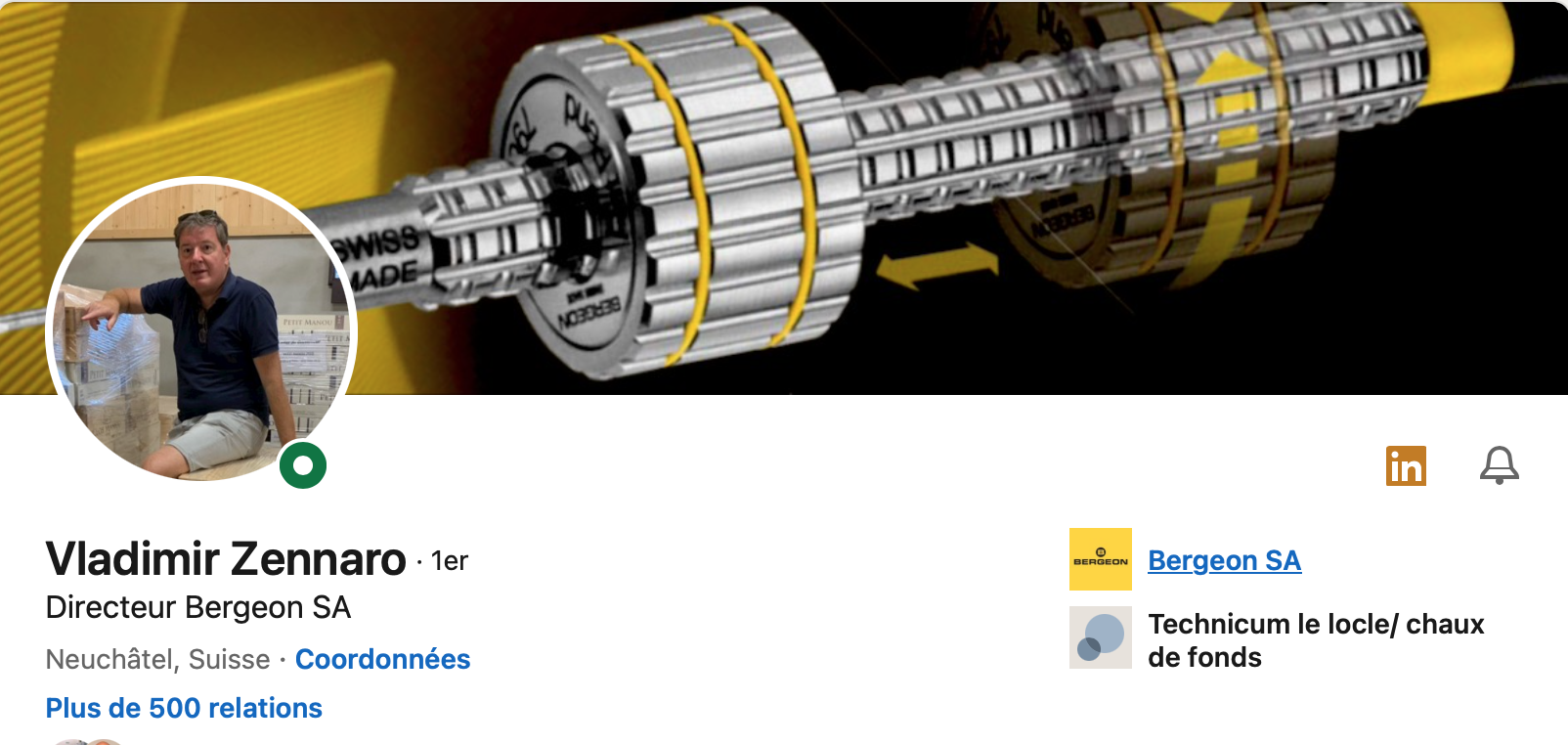
Instagram, in absolute terms, for extremely ephemeral publications. That’s what we do, and today we have someone in the company who’s in charge of it. We’re going to play with objects and highlight some features. LinkedIn is also extremely important for us, because it’s a professional network that enables us to communicate about the company’s values, its developments and its employees. I have to admit that TikTok isn’t one for us at the moment. We’ll see if we’re pushed to use this network too.
Since youth and training seem to be important to you, what advice would you give to a young person like me who is interested in watchmaking?
My first point would be to say that it’s a very good idea. Technical professions are complicated to acquire, probably more so than IT professions, which I know all about because I have two children who are IT specialists and have set up their own businesses. But these are special cases.
You understand computers today when you’re only three or four years old. I was talking earlier about my granddaughter, who can handle a smartphone at the age of four, just as I can at sixty-two. On the other hand, technology is going to require a real personal investment that is not innate. It can be a bit daunting, but I think it’s one of the best jobs around. In the sense that the quality of the finished product is tangible. When you make a watchmaking tool, you can see it. When you make a watch, you can see it. When you work with computers, you’re dealing with ephemeral things that can’t be seen, even if I’m not in any way questioning their importance in everyday life, particularly in terms of the creative uses they can be put to. But technical professions are extremely valuable because they require a real commitment from the outset.
So my advice for someone going into these professions is, first of all, to be curious, very curious, a bit like you… and to be present, even a little impertinent. To dare to ask the questions that sometimes bother you, and above all to seek information from people who know their job and can explain it simply from A to Z, without being too didactic. I think it’s also a good way of overcoming certain preconceptions, prejudices about the fact that, for example, mechanics is dirty… well, it’s not! Today’s workshops are no longer dark and noisy (well, a little, but much less than in the past), and there’s dirt everywhere. I’m not saying you can eat on the floor, but you can almost. This means that companies are becoming more aware of the need to provide the new generation with quality working conditions and equipment, with machines that cost a lot of money (several hundred thousand francs, even millions) and which therefore imply a real responsibility on the part of mechanics. So the courage to say “I want to be a technician” is a wonderful thing, and I fully support it. Incidentally, our company is extremely training-oriented.
You’ve just visited the Manufacture. I’m not saying you can eat off the floor, but almost
This means that there is a growing awareness on the part of companies that want to provide the new generation with quality working conditions and facilities, with machines that are very expensive (several hundred thousand francs, if not millions) and which therefore imply a real level of responsibility for their mechanics. So the courage to say “I want to be a technician” is a wonderful thing, and I fully support it. In fact, our company is extremely training-oriented.
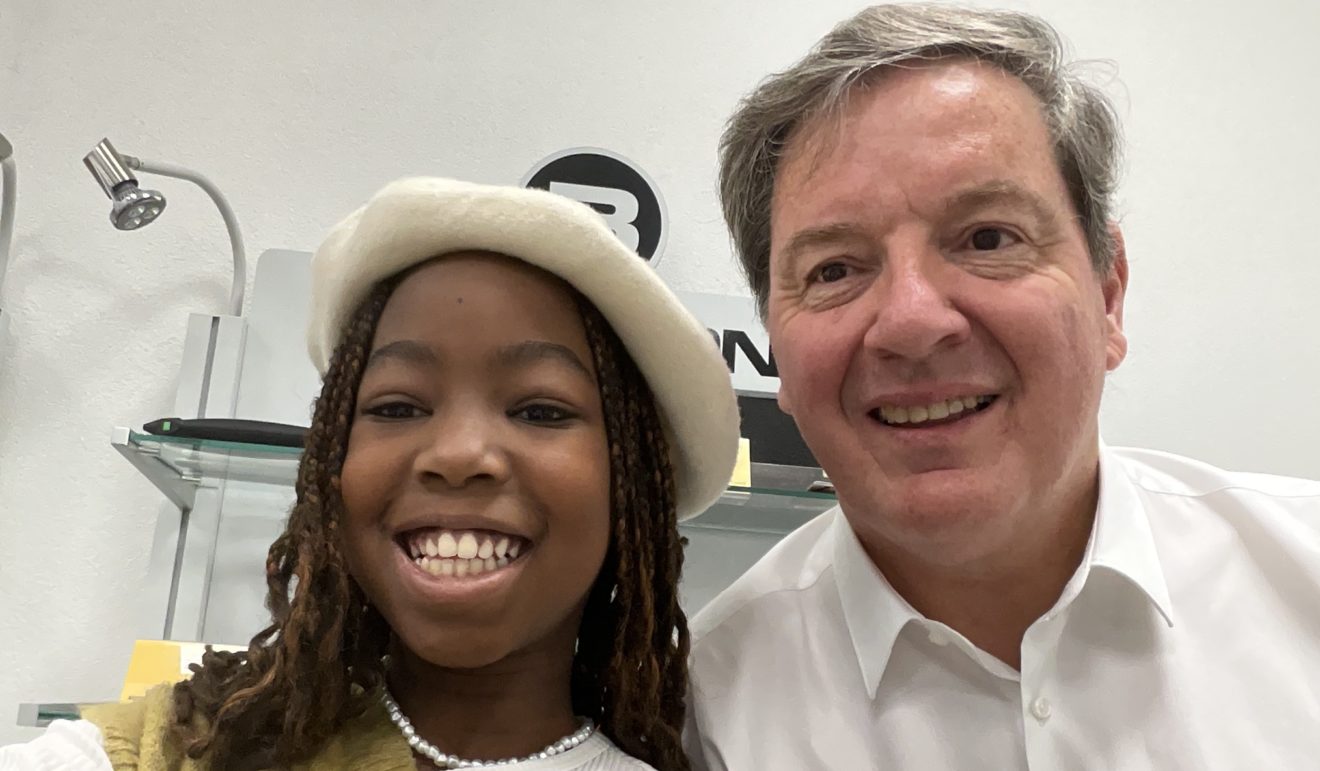
Let’s take a selfie for my album?
Yes, with pleasure!